

Recent expert discussions in Prague and Paris offered a timely opportunity to look at how this complexity is reflected in modern autoimmune testing — and why different laboratory needs call for a broad range of diagnostic technologies.
.png)
BioVendor's autoimmune and specialty diagnostics portfolio is built around this range of needs, covering areas such as systemic and rheumatic disorders, gastrointestinal and liver-related autoimmune conditions, neurological autoimmunity, and endocrine and diabetes-related autoimmunity.
“From an R&D perspective, our goal is to provide laboratories with diagnostic tools that are both clinically meaningful and practical for routine use,” says Martina Hložánková, CTO at BioVendor. “Different clinical questions require different solutions — including highly automated assays for routine monitoring and multiplex technologies capable of evaluating broader autoantibody profiles from a single sample.”
At the same time, autoimmune diagnostics is moving toward greater standardization of methods and improved comparability of results across laboratories. This becomes increasingly important as laboratories work with broader autoantibody profiles and more complex multiparametric datasets.
Advanced data analysis tools, including artificial intelligence, may further support the interpretation of these datasets and help translate complex diagnostic results into clinically useful information.
For Martina Hložánková, this development is also closely linked to the growing role of targeted therapies in autoimmune diseases. As treatment options become more specific, the need for reliable biomarkers and effective tools for patient stratification and treatment monitoring becomes even more important.
“Diagnostic innovation therefore plays a role not only in disease detection, but also in supporting more personalized patient management throughout the treatment journey,” she adds.

A portfolio built around different diagnostic needs
BioVendor’s autoimmune and specialty diagnostics portfolio brings together several technologies designed to support different autoimmune diagnostic needs, clinical areas and laboratory workflows.
Fully automated CLIA assays support routine and standardized testing in areas such as systemic autoimmune diseases, celiac disease, antiphospholipid syndrome and autoimmune diabetes. ELISA remains a flexible and established technology for both routine and specialized autoimmune markers, enabling laboratories to expand their testing capabilities through a broad range of parameters.
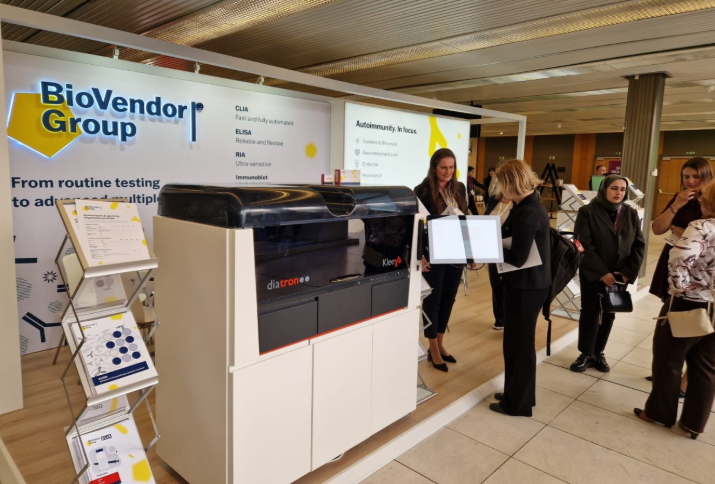
In selected applications, RIA continues to play an important role thanks to its high sensitivity, particularly in neurological and endocrine autoimmunity, where low-titer or highly specific targets may be clinically relevant.
For more complex diagnostic questions, immunoblot and Microblot-Array technologies support multiparametric testing, confirmatory analysis and broader autoantibody profiling. BLOT-LINE ANA and ANCA combine multiple specific markers on one strip and support differential diagnostics in systemic autoimmune diseases and vasculitis.
Microblot-Array extends this multiparametric approach further by combining immunoblot precision with efficient multiplex capability. In ANA diagnostics, MBA ANA enables the detection of 44 markers in a single test, helping laboratories move from fragmented individual testing toward a more comprehensive profile-based approach. Beyond ANA, the MBA portfolio also includes Liver and Autoimmune Gastroenteritis assays to support broader autoimmune disease investigation.
Multiparametric approaches in the spotlight
One topic that resonated strongly at the Autoimmunity Congress Prague 2026 was the role of multiparametric antibody testing in autoimmune diagnostics.
Nicola Bizzaro, MD, Chairman of the Study Group on Autoimmunology of the Italian Society of Clinical Pathology and Laboratory Medicine, presented a lecture on multiparametric antibody tests compared with indirect immunofluorescence in ANA screening in patients with autoimmune rheumatic diseases. Microblot-Array (MBA) was featured in this lecture, highlighting the growing relevance of multiparametric approaches in autoimmune diagnostics.

MBA was also represented in poster presentations at the congress, further demonstrating scientific interest in its use for autoimmune diagnostics.
Together, these contributions reflected the growing interest in methods that can support broader autoantibody profiling, more structured laboratory workflows and greater standardization of results.
“The study showed that MBA can deliver performance comparable or superior to HEp-2 IIF in ANA testing,” says Zuzana Gavačová, Product Manager at BioVendor. “These findings further support the growing role of multiparametric assays in modern autoimmune diagnostics, highlighting their value not only for confirmatory testing but also for their potential integration into screening algorithms, while helping laboratories move toward more standardized and less operator-dependent workflows.”
What we discussed in Paris
The GEAI Congress 2026 in Paris continued this expert dialogue in a more focused setting. As a French scientific meeting dedicated to autoimmunity, GEAI offered a space for clinically oriented discussions on autoimmune diseases, laboratory practice and diagnostic innovation.
At the BioVendor booth, the team presented selected autoimmune diagnostics solutions, including the Microblot-Array platform, CLIA technologies and ELISA assays. These conversations provided an opportunity to discuss not only individual technologies, but also their role in broader autoimmune diagnostic workflows.
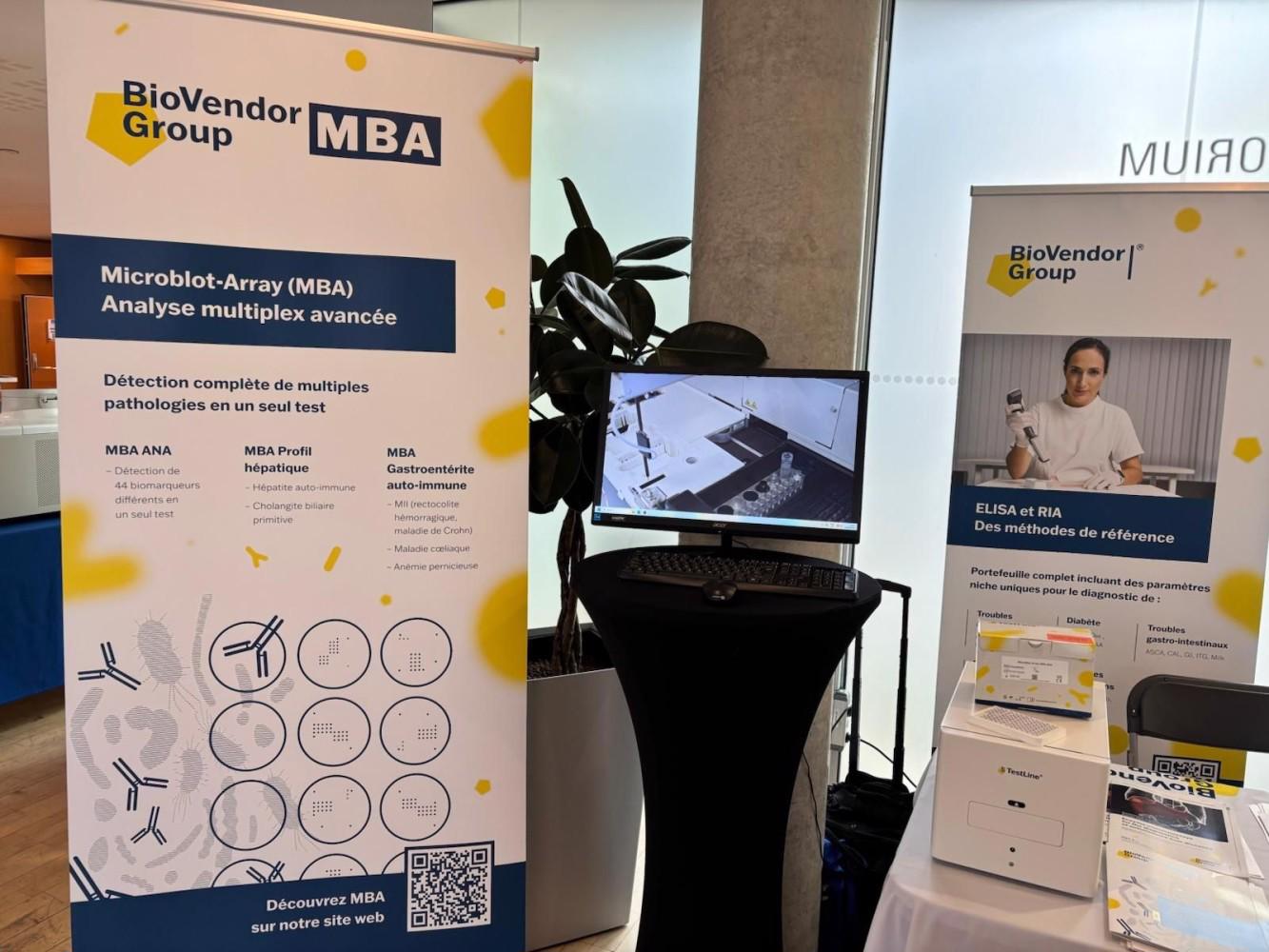
For Laurent Augis, BioVendor Sales Manager for France, Luxembourg and Wallonia, GEAI once again proved to be a valuable scientific and professional meeting point.
“The GEAI Symposium is always an enriching experience, both personally and scientifically,” says Laurent Augis. “This year, we had valuable discussions around our MBA multiplex solution for the detection and quantification of autoantibodies, as well as our CLIA diabetes panel combining functional and autoimmune diabetes parameters.”
Held at the Institut Pasteur, a venue deeply rooted in scientific history, the congress provided a fitting setting for expert discussions on autoimmune diagnostics and innovation.

Listening to laboratories, developing relevant solutions
For BioVendor, expert congresses are not only about presenting technologies. They also provide a valuable opportunity to listen — to better understand what laboratories need, what challenges they face and how diagnostic solutions can support clinical practice.
The discussions in Prague and Paris reinforced the importance of developing diagnostic solutions that respond not only to scientific progress, but also to the practical needs of laboratories and clinicians.
“Scientific congresses provide much more than an overview of the latest research,” concludes Martina Hložánková. “They offer a unique opportunity to discuss unmet clinical needs directly with clinicians, laboratory specialists and key opinion leaders. For us, these interactions are invaluable because they help validate our development priorities and reveal how diagnostic technologies are being used in real-world practice.”
Explore our autoimmune diagnostics portfolio. Learn more about our CLIA solution for automated routine testing and Microblot-Array technology for multiparametric autoantibody profiling.

